
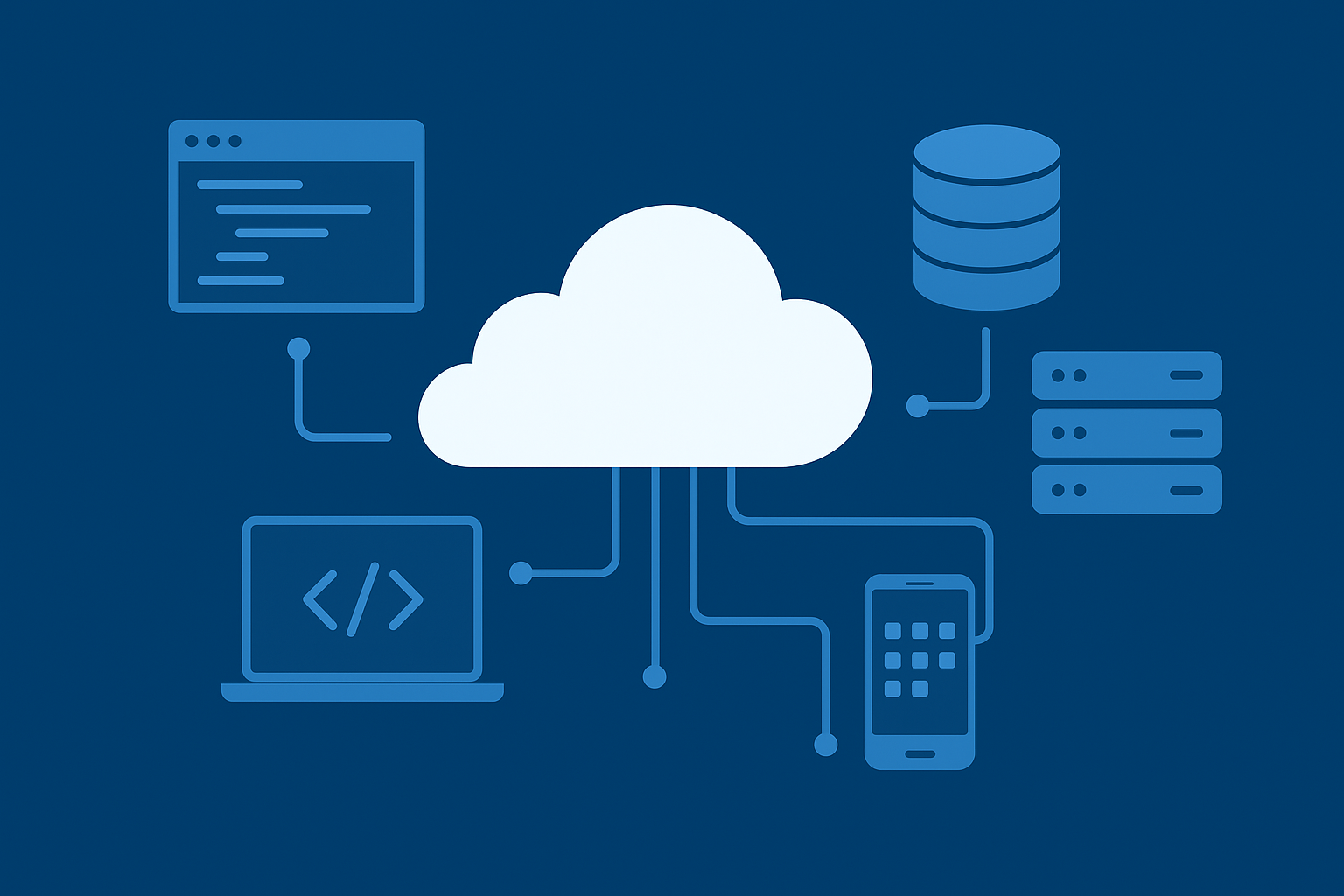
Building a SaaS application that can scale from a handful of users to millions requires careful architectural planning from day one. This comprehensive guide covers the essential patterns, practices, and technologies you need to build a truly scalable SaaS product.
Multi-Tenancy Architecture
The foundation of any SaaS application is its multi-tenancy strategy. There are three primary approaches, each with distinct trade-offs:
1. Shared Database, Shared Schema
All tenants share the same database and tables, with a tenant identifier column distinguishing data. This is the most cost-effective approach but requires careful attention to data isolation.
- Pros: Lowest infrastructure costs, simplified maintenance
- Cons: Higher risk of data leakage, complex query optimization
- Best for: Startups, applications with many small tenants
2. Shared Database, Separate Schemas
Each tenant has their own schema within a shared database. This provides better isolation while keeping infrastructure manageable.
- Pros: Better data isolation, easier tenant-specific customization
- Cons: Schema migration complexity, moderate costs
- Best for: Mid-sized SaaS with varying tenant needs
3. Separate Databases
Each tenant gets their own database instance. Maximum isolation but highest operational complexity.
- Pros: Complete isolation, per-tenant optimization
- Cons: Highest costs, complex orchestration
- Best for: Enterprise customers with strict compliance requirements
API Design for Scale
Your API is the backbone of your SaaS. Design it with scalability in mind from the start:
Rate Limiting
Implement tiered rate limiting based on subscription plans. Use a token bucket or sliding window algorithm for smooth request throttling. Redis is excellent for distributed rate limiting across multiple API servers.
Versioning Strategy
Plan for API evolution with proper versioning. URL versioning (/api/v1/) or header-based versioning both work well. The key is maintaining backward compatibility to avoid breaking existing integrations.
Pagination and Filtering
Always paginate list endpoints using cursor-based pagination for large datasets. Offset pagination works for small datasets but becomes inefficient at scale. Allow flexible filtering and sorting to reduce unnecessary data transfer.
Authentication and Authorization
SaaS applications require robust auth with tenant awareness:
- JWT tokens: Include tenant ID and role claims for stateless authentication
- OAuth 2.0: Support SSO for enterprise customers
- Role-Based Access Control: Implement granular permissions with organizational hierarchies
- API Keys: Provide machine-to-machine authentication for integrations
Background Job Processing
Heavy operations should be processed asynchronously to maintain responsive APIs:
- Message Queues: Use RabbitMQ, Redis, or cloud services like AWS SQS for reliable job delivery
- Worker Pools: Scale workers independently based on queue depth
- Priority Queues: Process premium tenant jobs with higher priority
- Retry Logic: Implement exponential backoff for failed jobs
Database Optimization
As your tenant base grows, database performance becomes critical:
Indexing Strategy
Every query should hit an index. Composite indexes with tenant_id as the leading column ensure efficient tenant-scoped queries. Regularly analyze query patterns and add indexes proactively.
Connection Pooling
Use connection pooling (like PgBouncer for PostgreSQL) to manage database connections efficiently. A single connection pool can dramatically reduce database server load.
Read Replicas
Offload read queries to replicas, especially for reporting and analytics. This allows your primary database to focus on writes.
Caching Strategies
Effective caching is essential for SaaS performance:
- Application Cache: Cache frequently accessed data with Redis or Memcached
- CDN: Cache static assets and API responses at the edge
- Query Cache: Cache expensive database queries with smart invalidation
- Tenant-Aware Keys: Always include tenant ID in cache keys to prevent data leakage
Monitoring and Observability
You can't scale what you can't measure. Implement comprehensive observability:
- Metrics: Track request latency, error rates, and tenant-specific usage
- Logging: Structured logs with tenant context for debugging
- Tracing: Distributed tracing to identify bottlenecks across services
- Alerting: Proactive alerts on anomalies before they impact users
Infrastructure Considerations
Modern SaaS applications benefit from cloud-native architecture:
- Containers: Package applications in Docker for consistent deployments
- Kubernetes: Orchestrate containers for automatic scaling and self-healing
- Serverless: Consider serverless for variable workloads to optimize costs
- Infrastructure as Code: Use Terraform or Pulumi for reproducible infrastructure
Conclusion
Building a scalable SaaS application is a journey, not a destination. Start with solid foundations—proper multi-tenancy, clean API design, and observability—then iterate as you grow. Remember that premature optimization is the enemy; build for your current scale while designing for future growth.
At AlkaSpire, we specialize in building scalable SaaS solutions. If you're planning to build or scale a SaaS product, let's discuss how we can help you succeed.